Which Compound to Use to Manufacture a Rear-View Camera Housing
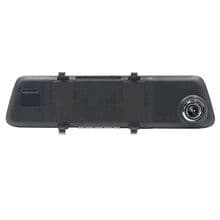
What Is It?
NEXXALITE™ Glass Filled PBT / PET Compound reinforces the PBT/PET blend with 30-35% glass fiber for higher thermal and dimensional stability than the mineral-filled grade.
How It's Manufactured
Glass fiber is compounded into the blended PBT/PET resin on a twin-screw extruder, with fiber content set higher than the mineral-filled grade specifically where the application demands greater thermal and dimensional performance.
Manufacturing Process for This Application
Camera and mirror housings are injection molded from the dried, glass-reinforced compound. A rear-view camera housing has to hold precise internal alignment for the lens and sensor assembly across the vehicle's full outdoor temperature range, so dimensional stability under thermal cycling is a functional requirement, not just a cosmetic one.
Why Polymer Choice Matters Here
Camera and sensor housings on a vehicle exterior see direct sun, engine heat, and cold-weather cycling across the same part — a housing that shifts dimensionally with temperature will misalign the internal lens or sensor, degrading image quality or accuracy, which is a functional failure specific to this application.
Why This Compound Is Suited
This grade is used "whether excellent thermal stability and dimensional stability required" for mirror cases and similar precision exterior housings — exactly the requirement a rear-view camera housing places on its material.
Nexxa Compounds is a leading manufacturer of PBT/PET compounds for rear-view camera housing applications in India, supplying some of the largest manufacturers across India and internationally.
Related Posts
Which Compound to Use to Manufacture a Car Headlight Bezel
Why mineral-filled PBT/PET is used for headlight bezels and mirror covers needing thermal and dimensional stability.
Which Compound to Use to Manufacture a Vehicle Fuel Cap
Why glass-filled PA6 is the standard compound for automotive fuel caps, how it is manufactured, and which grades to consider as alternatives.
Which Compound to Use to Manufacture a Car Door Handle
Why unfilled PA6 is specified for exterior door handles, and when to step up to a reinforced grade instead.